
Discover the Benefits of Mulching Your Lawn & Landscape
Instant Insights:
- Mulch is organic or inorganic material spread over soil
- Organic mulch breaks down slowly and feeds the soil
- Inorganic mulch lasts longer but contributes nothing nutritionally
- Garden mulching and lawn mulching are two separate things that both reduce long-term maintenance
- Your Green Team helps locals achieve beautiful, pest-free lawns in Florida
Three Common Mulch Myths
-
Mulch is purely decorative
Yes, it looks nice, but that’s not mulch’s sole purpose. What mulch is actually doing is slowing moisture loss, moderating soil temperature, suppressing weeds, and protecting root systems. And that’s all happening out of sight below the surface and in the soil.
-
Mulch and compost are the same thing
Mulch sits on top of the soil. Its job is to retain moisture, block weed germination, and provide a buffer against temperature swings. Compost gets worked into the soil to deliver nutrients directly to plant roots. Organic mulch will eventually decompose and contribute something to the soil, but that’s a slow secondary benefit.
-
Any mulch works the same as any other
The wrong material in the wrong spot can trap heat where it isn’t wanted, compact into a water-shedding crust, or sit on the surface for months doing nothing useful. Matching the material to the situation is extremely important.
What Is Mulch?
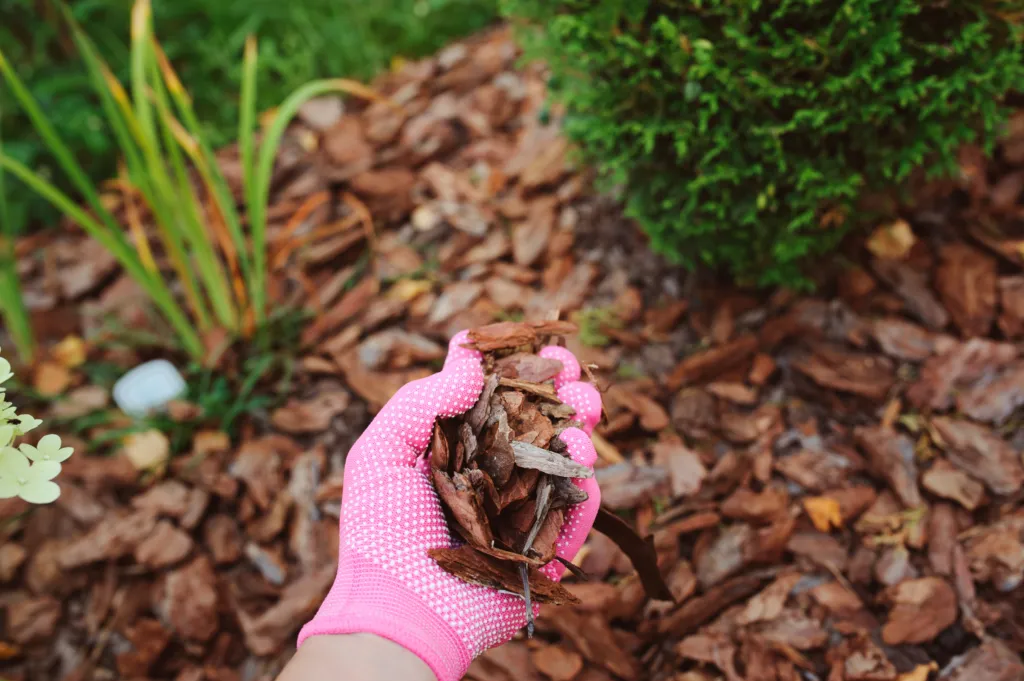
Mulch is any material spread over bare soil to protect or improve it. The category is broad on purpose. It includes bark chips, pine straw, shredded leaves, straw, gravel, rubber, and even the finely cut grass clippings your mower leaves behind.
Some mulches are organic, meaning they’re made of plant-based materials that decompose over time and gradually return something to the soil beneath them.
Others are inorganic, like gravel, crushed stone, rubber, and landscape fabric. These are built to hold their position for years without breaking down. Both have legitimate uses, and choosing between them should be deliberate rather than default.
More Details on What Mulch Is Doing
It keeps moisture available between rain events. Florida’s wet season delivers plenty of rain, but it arrives in concentrated bursts. What doesn’t drain immediately can evaporate fast once the sun returns.
Mulch slows that evaporation significantly, keeping moisture in the soil where roots can access it rather than losing it to the air. That translates into less supplemental irrigation and plants that aren’t constantly cycling between saturated and stressed.
It stabilizes soil temperature. Florida soil in a shaded mulched bed and Florida soil in an unprotected sunny bed are not the same temperature. Mulch insulates, keeping the root zone cooler when afternoon heat is at its most intense and buffering against the occasional winter cold snap.
It intercepts rainfall impact. Florida’s summer storms arrive hard and fast. Water hitting bare sand or clay moves it. That can lead to compacting the surface, washing away organic matter, and splashing soil-borne disease up onto plant foliage.
A mulch layer absorbs that energy. The soil underneath stays looser, better structured, and better populated with the microbial life.
It reduces weed competition. Block the sun and most weed seeds don’t germinate. A two-to-four-inch layer of mulch is enough to substantially reduce the weed population in a bed.
It makes the yard look finished. That matters, especially in neighborhoods where landscaping is visible and curb appeal has real value.
Garden Mulching and Lawn Mulching: Not the Same Practice
The word “mulching” technically describes two quite different things, and treating them as one leads to confusion about both.
Garden bed mulching is what most people picture. This includes spreading bark, leaves, straw, gravel, or similar material over the soil around plants and shrubs.
The goal is coverage. You’re protecting the soil surface, moderating the environment around roots, and reducing the maintenance burden that comes with bare ground.
Lawn mulching is a mowing practice. Instead of collecting grass clippings or throwing them out the discharge chute, a mulching mower finely chops the clippings and deposits them back into the turf. They settle between grass blades within a day or two and decompose into the soil, returning nitrogen, potassium, and other nutrients in the process.
For Florida’s warm-season grasses (Bermuda, Zoysia, St. Augustine, centipede, and bahia) this is a high-value habit. The growing season here is long, mowing frequency is high, and the volume of nutrients going back into the root zone across a full year of regular mulching adds up.
Your First Real Decision: Organic or Inorganic?
Organic Mulch: Better for Soil Health
- Bark, wood chips, pine straw, shredded leaves, straw, hay, grass clippings, layered newspaper
- This mulch is made of anything that was once a plant and will eventually decompose
- Decomposition requires periodic replenishment, but it also means the soil beneath is gradually improving
- In Florida, where sandy soils drain fast and have limited capacity to hold nutrients or moisture, that steady organic input has compounding value
- Organic mulch is the stronger choice for vegetable gardens, flower beds, and any area where you’re trying to improve soil over time
Inorganic Mulch: Better for Low Maintenance
- Gravel, crushed stone, rubber chips, plastic sheeting, and landscape fabric
- These kinds of mulch don’t decompose
- Persistent and low-effort, while also effective at blocking weeds and retaining moisture without needing seasonal replacement
- Contributes nothing to soil fertility or structure
- Inorganic mulch makes sense around foundations, established trees and shrubs, and plantings that prefer drier or rockier conditions
- Once in place, removing it is a serious project
Matching the Material to Your Situation
Bark and wood chips work well around trees, shrubs, and foundation plantings that aren’t disturbed frequently. Coarser material holds up better through Florida’s wet season but makes digging difficult when you need to add or move plants.
Pine straw is the natural choice for much of Florida. It’s widely available, resists compaction, allows water to pass through easily, and breaks down slowly enough to provide a season or more of coverage.
Shredded leaves are free, build excellent soil biology as they decompose, and attract earthworms. Just be sure to shred them before applying.
Grass clippings are best kept in the lawn through mulching, or used in thin layers in garden areas where quick nutrient return is the goal. Thick clipping layers smell unpleasant and block water.
Straw and hay are practical for vegetable gardens and paths. They reduce disease splash onto lower foliage and break down slowly enough to last through a growing season.
Layered newspaper, moistened and covered with another organic mulch, makes a surprisingly effective weed barrier that biodegrades naturally. Avoid glossy pages.
Plastic and landscape fabric control weeds and retain moisture effectively around established shrubs. Plastic traps heat and restricts air and water movement over time. In active garden beds where soil biology matters, the trade-offs usually aren’t worth it.
Gravel and stone suit rain gardens, drought-tolerant plantings, and spots where drainage is a priority. Florida has plants that thrive in rocky conditions and others that don’t. Know what you’re working with before committing.
Making It Work in the Ground
The mechanics of garden bed mulching are simple, but the details determine whether it works.
Start by fully preparing the bed. Remove weeds by the root, clear out old compacted mulch, and level the soil surface before anything new goes down.
Two to three inches is the target depth. Less than that and moisture retention and weed suppression are inconsistent. More than that and you start blocking the air and water exchange that roots depend on.
Mulch volcanoes (towering mounds piled against tree bases) are a common sight in Florida neighborhoods and a reliable source of rot and disease. Pull mulch back a few inches from any trunk or stem.
Leave some soil exposed. Ground-nesting bees need bare soil for habitat, and plants you want to reseed naturally can’t do it through a blanket of mulch. Strategic gaps in coverage preserve both.
Florida’s Mulching Calendar
For garden beds, the effective mulching season in the Tampa Bay area runs almost year-round. Late winter through early spring, roughly February into March, is the best time for a primary application. This gets ahead of spring weed germination before the rainy season builds momentum.
A second application in early fall, as the wet season winds down, protects soil through the drier months and gives organic material time to begin breaking down before growth slows.
For lawns, Florida’s warm-season grasses support a longer mulching window than cool-season turf anywhere further north. Mid-spring through summer is the productive time. Growth is vigorous, mowing frequency is high, and the nutrient return from clippings is most valuable during active growth periods.
An early fall session returns nutrients before the lawn begins to slow. When growth becomes uneven and the lawn is staying wet for extended stretches, ease back to conventional mowing until conditions stabilize.
When Mulching Makes Things Worse
New turf. Young grass needs time to develop before the demands of mulching are added to it. Give newly established lawns a season before switching to a mulching routine. And remember that moss in the lawn should never be mulched.
Grass that’s gotten away from you. When a lawn misses several mowing sessions, the clipping volume from a single pass overwhelms what the turf can absorb cleanly. Mow conventionally and collect the first pass, then return to mulching once the height is back in range.
Spotty mowing schedules. Lawn mulching depends on frequency. Miss enough sessions and clippings become too long and heavy to break down quickly. If weeds have had time to flower and seed in the interim, mulching them distributes seeds throughout the lawn rather than returning nutrients to it.
Wet or heavily shaded areas of the lawn. In Florida’s rainy season, some lawn areas stay damp. Wet clippings from those areas stick together, clump on the surface rather than dispersing, and create conditions that favor fungal disease and yellowing.
Quick Answers
-
How much is enough?
Two to three inches in garden beds. On the lawn, clippings should form a layer thin enough to disappear into the turf within a day or two. If material is still sitting on the surface after that, mow more frequently or reduce the cut height slightly.
-
Does lawn mulching build thatch?
No, and this one gets repeated enough to be worth addressing directly. Thatch comes from accumulated dead roots, stolons, and stems.
-
Can I mulch fallen leaves into the lawn?
Light, dry leaves can be finely cut into the turf without issue. Thick, wet, or matted leaf deposits should be collected and composted.
-
Is mulch necessary everywhere?
No. Some plants and situations do better with exposed soil. But in Florida’s combination of heat, sandy soil, and variable rainfall, the moisture and temperature benefits make mulch the practical default for most garden situations.
-
What about weeds? Will mulching spread them?
Regular mowing prevents most weeds from reaching the stage where they produce viable seed.
Expert Lawn Care Creates Exceptional Lawns
What is mulch, and what does it do? The simple answers are a variety of different things, and quite a lot. It reduces how much you need to use sprinklers, cuts down on weeds, protects roots through Florida’s temperature extremes, and gives beds and borders the finished look that makes a yard feel maintained rather than just mowed.
Get the type, depth, and timing right, and it becomes one of the most efficient investments in your landscape’s long-term health.
If other DIY lawn care tasks would take you too much time or effort, reach out to the local pros at Your Green Team! We proudly serve several Florida cities, ensuring high-quality lawn care and pest control services for these communities: