

Get Expert Details on the Nightmare Weed of Florida Homeowners
You’ve seen it before. It looks like a brighter green patch of grass that stands taller than the rest. And no matter how many times you pull it, there it is again the following week. That’s the nutsedge weed. And it’s got a secret superpower.
This Florida weed is different. It survives most of the tricks that work on everything else. But with the right approach and help from the lawn care pros at Your Green Team, you can beat it.
Quick Nutsedge Overview:
- It’s a sedge, not a grass. Learn more about sedges in this University of Florida article.
- Your pre-emergent won’t touch it. Nutsedge grows from underground tubers, not seeds. So those spring barrier applications you rely on? Totally useless here.
- One tiny tuber is powerful. Left alone in the soil, a single nutlet can generate nearly 2,000 new plants and 7,000 new tubers in just one growing season.
- Two species cause trouble in Florida. Yellow nutsedge is more common and somewhat easier to manage. Purple nutsedge is tougher to kill.
- Consistency is everything. The right herbicide, applied at precisely the right time, repeated across multiple seasons.
- Pulling makes it worse. Seriously! We’ll explain why.
- A thick, healthy lawn is your best defense. Improve your drainage and turf density, and you’ll see fewer problems over time.
- Professional lawn care can help. Your Green Team works with Florida homeowners every day to control weeds like nutsedge.
Nutsedge Appearance
Spotting nutsedge isn’t hard once you know what to look for. The trick is knowing which clues actually matter.
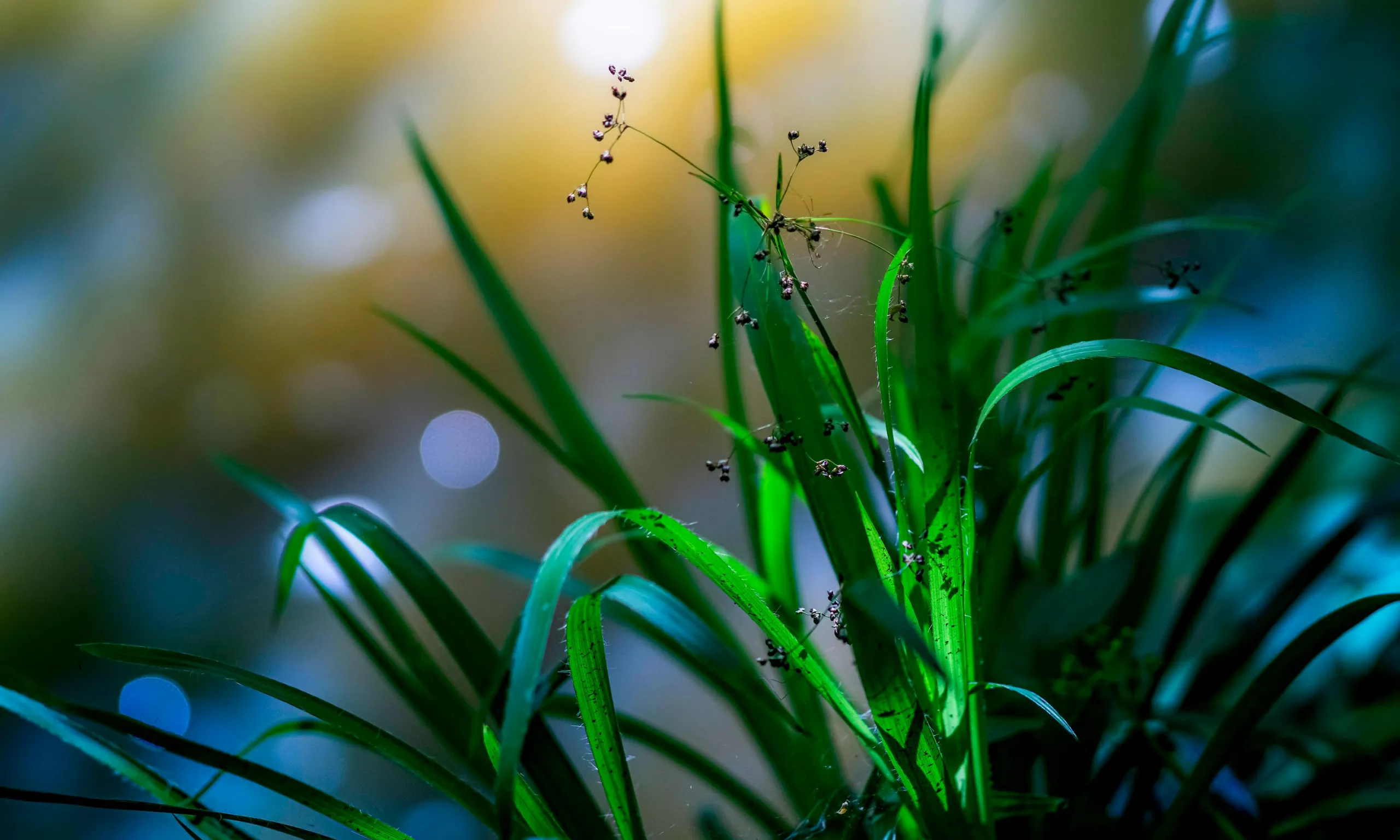
The stem test is your most reliable tool. Grab a stem and roll it gently between your fingers. Feel those edges? Nutsedge stems are triangular, while grass stems are either round or flat.
Beyond the stem, here’s what else stands out:
The color is usually the first thing people notice. Nutsedge tends to be brighter and more yellow-green than the turf around it, especially during peak summer heat.
Look at how the leaves grow. Nutsedge sends out three blades radiating from the same point on the stem. Grass grows two leaves per node.
Watch the vertical growth. Nutsedge shoots up faster than surrounding grass between mowings. That’s often what catches your eye first.
Feel the texture. Nutsedge leaves have a faint waxy sheen, almost like they’ve been polished. Most lawn grasses have a matte finish.
Check for flower heads on mature plants. You’ll see a spiky, branching cluster at the top of the stem that looks roughly like an open umbrella.
In a Florida lawn, nutsedge creates an uneven, patchy appearance. You’ll see sections of taller, differently colored growth that just look out of place.
Is It Yellow or Purple Nutsedge?
Yellow Nutsedge
This is the more widespread variety across the United States. It tends to respond better to correctly timed herbicide applications.
Yellow nutsedge typically emerges in early to mid-summer and reproduces primarily through nutlets that develop at the tips of its rhizomes. It prefers wet, poorly drained soils.
Think of it as the less aggressive cousin. It’s still a problem, but somewhat manageable with persistence.
Purple Nutsedge
This one is harder to eliminate. Why? Because purple nutsedge produces nutlets along the entire length of its underground stems, not just at the tips. That means even hand-pulling can actually scatter nutlets across a wider area and make your infestation worse.
Purple nutsedge typically emerges later in summer and is especially prevalent in Florida and other warm, humid states.
Professional-grade products are usually necessary to make real headway against it.
A quick word about kyllinga. This lookalike weed often gets mistaken for nutsedge. Its root system is weaker, and it typically responds better to treatment.
Not sure which one you’re dealing with? Get a professional to make the identification before you take any other steps. Using the wrong product wastes money and gives the actual problem more time to spread.
Where Nutsedge Hides in Florida Lawns
Florida’s warm, humid climate gives nutsedge a longer active season than almost anywhere else in the country. Understanding where it likes to grow helps you spot problems earlier and make adjustments that pay off over time.
Consistent soil moisture is the number one driver. Check these spots first:
- Low-lying areas where water pools after rain
- Sections near downspouts or irrigation heads that stay perpetually damp
- Soils with high clay content that drain slowly
Compacted soil is another big factor. Nutsedge tolerates compacted ground considerably better than most turf grasses. That means it takes over areas where your lawn is already struggling.
Think about spots that never seemed to grow well, thin patches along edges, and areas with heavy foot traffic from kids or pets.
The Florida timeline for nutsedge typically runs from late spring through early fall. Growth peaks during the hottest summer month, when warm-season grasses like St. Augustine and Bermuda are most stressed.
The above-ground plant eventually dies back as temperatures drop toward winter. But here’s the catch: the nutlets stay right where they are, waiting for next year.
Revealed: The Nutsedge Weed’s Superpower
Let’s talk about that superpower we mentioned earlier that homeowners hate. It’s the nutlet system.
A single nutlet can sit in your soil through conditions that kill the above-ground plant entirely. Herbicide applications? Fine. Frost? No problem. Drought? Doesn’t care. Physical removal of the shoot? It’ll just grow another one.
When that dormancy ends depends on soil temperature, moisture levels, and other environmental cues that nutsedge reads better than any human can predict. A lawn that showed no nutsedge for an entire growing season after treatment can suddenly sprout new growth the following spring from nutlets that simply decided to wait.
Root depth adds to the frustration. Nutsedge root systems commonly extend 8 to 18 inches below the surface.
Hand-pulling at soil level almost never reaches the nutlets. In fact, it often stimulates dormant nutlets in the surrounding soil to activate. You’re not solving the problem. You’re accidentally making it worse.
Spread happens through multiple pathways at once: seeds, rhizomes extending laterally through the soil, and nutlets transported by foot traffic, equipment, or water movement across your lawn.
A weed that spreads this efficiently through this many mechanisms needs a deliberate, sustained response. Not a single application. Not a weekend warrior approach.
Tips for How to Get Rid of Nutsedge
No product eliminates nutsedge completely in one application. The realistic goal? Gradual population reduction. Season by season, year by year.
Identify accurately
Confirm the triangular stem, the three-blade leaf arrangement, the rapid regrowth pattern. Then determine whether you’re looking at yellow or purple nutsedge.
Stop pulling
The instinct to yank a weed out is natural. With nutsedge, that works against you. Pulling breaks the stem, leaves the nutlets, and frequently stimulates additional growth from surrounding dormant tubers.
Apply a selective sedge herbicide
Standard broadleaf weed killers don’t reach the underground tuber structures that sustain nutsedge. You need products specifically formulated for sedge control.
For Florida’s warm-season grasses (St. Augustine, Bermuda, Zoysia), always verify label compatibility before applying. Halosulfuron-based and sulfentrazone-based formulations are among the most established options for these grass types.
Time the application precisely
Late spring through early summer is your primary window. Young nutsedge plants (with fewer than five or six leaves) translocate herbicide down to the root system more effectively than older, more established plants. Treating at the wrong growth stage means wasting your product.
Give the application room to work
Avoid mowing for 48 hours before and after treatment. The leaf surface needs to be intact for proper absorption. Most established infestations will need a second application 7 to 10 days after the first.
The Impact of Nutsedge
A small cluster of nutsedge might not seem like an emergency. But the damage compounds in ways you might not see at first.
Nutsedge grows taller and more rapidly than warm-season turf grasses during summer. It competes aggressively for water, soil nutrients, and physical space in the root zone.
By the time an infestation is large enough to catch your eye, the problem has already been stealing resources from your lawn for weeks.
The cumulative effect is gradual but significant. Grass in infested areas thins out as nutsedge wins the battle for what it needs. Thinning turf creates open zones where other weeds can move in. And because nutlets continue producing new growth regardless of what happens above ground, the process of recovery extends well beyond what a single summer of effort can accomplish.
You’re not just fighting what you see today. You’re working through what’s been accumulating underground, sometimes for years.
Simple Changes to Make
Once you have an active infestation under treatment, adjusting your lawn care habits reduces future pressure. None of these steps alone will eliminate nutsedge. But together, they change the environment in ways that favor your grass over the weed.
Aerate annually. Compacted soil suppresses turf root development while nutsedge handles it comparatively well. Annual aeration loosens the soil profile and improves the movement of water, air, and fertilizer to the root zone where your grass needs it most.
Invest in turf density. Thick, healthy lawn grass is the best structural competition against weed encroachment. Overseed thin areas. Maintain a consistent fertilization program. Mow at the appropriate height for your grass type. These basics make weed establishment genuinely harder.
Apply mulch in non-turf areas. In landscape beds and around trees and shrubs, three to four inches of mulch suppresses nutsedge emergence. It also looks better and retains soil moisture for your desirable plants.
Water less often, but more deeply. Shifting to longer, less frequent watering cycles encourages grass roots to develop at depth. It also makes the upper soil layer less hospitable to germinating nutlets. That single change might be the most impactful thing you can do.
Correct drainage problems. Nutsedge loves low spots, damp areas, and sections of soil that drain slowly. Filling or regrading those zones removes an advantage the weed has been using against you.
Trust the Weed Control Pros at Your Green Team
Maybe you’ve already tried nutsedge killer without success. Maybe you’ve just noticed something suspicious in your lawn. If you want to stop or prevent the nutsedge weed, the best time to act is now.
Your Green Team can help you develop a customized plan tailored to your property and location. With skilled technicians and the highest quality materials, we’ll get your lawn looking its absolute best.
We proudly serve several Florida cities, ensuring high-quality lawn care and pest control services for these communities:
Blog Contributor: Rob Karr
Rob Karr serves as the New Port Richey and Hudson Branch Manager for Your Green Team, with 22 years of experience. His professional perspective is shaped by customer interaction, team communication, employee safety, and long-term branch leadership. His experience gives him a practical understanding of both customer service and day-to-day lawn care operations.