
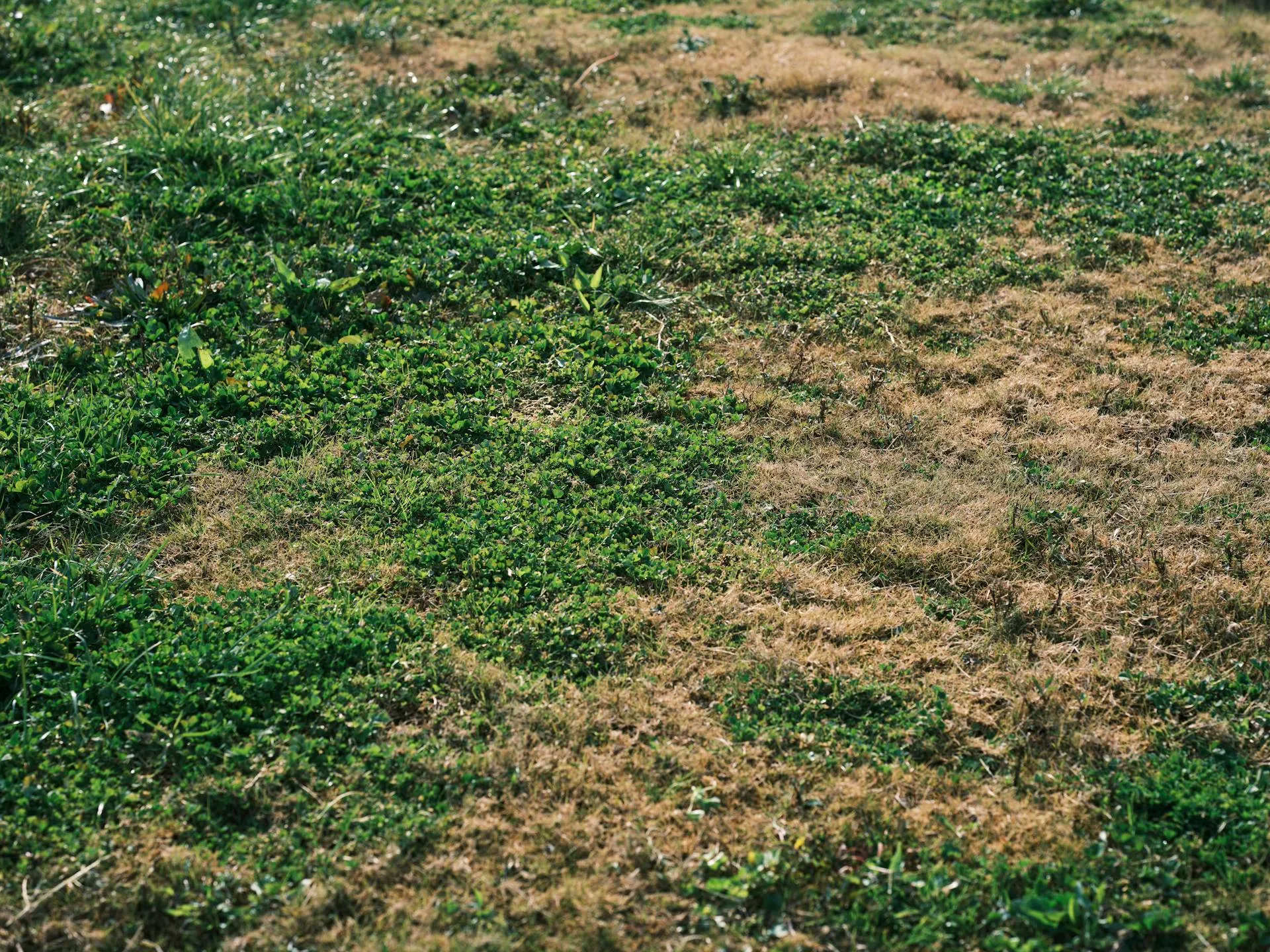
Reviving Dead Grass On Your Brown Florida Lawn
Determining If Your Yard Is Truly Gone or Just Dormant
Watching your yard shift from lush green to dull brown feels awful. That brown color can make you question everything you’ve done to maintain your property. Maybe you’re thinking about tearing everything out and starting over?
Hold on. Before you commit to any drastic changes you might regret later, we need to find out what’s actually happening with your turf. Keep reading to identify whether your grass is dormant or deceased, with insights from the lawn care professionals at Your Green Team!
Sleeping Grass vs Dead Grass
There’s nothing inherently wrong with dormancy. Think of it as your lawn’s version of hibernation. It’s conserving resources until environmental conditions improve. Deceased grass is another story entirely. That happens when both the root system and crown have permanently failed.
Here’s how to diagnose your situation properly. Get down on your knees and separate those brown blades with your fingers. Examine the base carefully. Any trace of green coloring near the crown (where roots meet shoots) means your grass is merely sleeping.
Another diagnostic method involves the pull test. Grip some grass firmly and pull gently upward. Grass in dormancy resists because the root structure remains intact. Dead grass lifts away with virtually no effort.
One more thing: Dormant grass displays the same coloring all over your lawn, with blades still upright. Everything looks tan or straw-like but consistent. Patchy areas that feel squishy or emit foul odors signal something more troubling than simple dormancy.
The Science Behind Lawn Dormancy
Throughout winter months across the South, your lawn’s grass often enters dormancy or experiences frost-related stress. This doesn’t mean it’s dying. You’ll observe warm-season varieties (Bermuda, Zoysia, Bahia, St. Augustine) halt their growth and develop brown tones or lose vibrancy.
What causes this? Reduced sunlight makes photosynthesis challenging. Lower temperatures trigger warm-season grasses to decelerate growth and change color—a completely natural plant response.
Meanwhile, plenty of activity continues underground. Nature keeps working the soil through decomposition processes and nutrient circulation. Microorganisms steadily break down organic material, gradually releasing nitrogen, phosphorus, and potassium for future use when grass reactivates come spring.
Throughout dormancy, these nutrients get stored within roots and the crown—the critical junction where roots and shoots converge at soil level. This crown serves as the grass’s lifeline, storing energy reserves and generating new tissue.
When temperatures climb again, grass essentially wakes up. Spring arrives, your lawn resumes active growth (once temperatures support warm-season plant development), and green hues return.
How Dormancy Varies by Season
When water becomes scarce, cool-season varieties like fescue or bluegrass enter summer dormancy. They’ll brown out during July and August, essentially waiting for September’s cooler weather to arrive.
Warm-season varieties in Florida behave oppositely. They brown during winter months and revive vigorously in spring, maintaining green color throughout summer when cool-season types would struggle.
Your specific location affects grass behavior significantly. For instance, within North Carolina’s transition zone, warm-season grass might begin dormancy once nighttime temperatures dip below 50°F during late fall. Further south, identical varieties might not go dormant until December arrives.
What Kills Grass or Turns It Brown?
When brown grass is genuinely dead, you’ve got a legitimate problem requiring investigation before any solution attempts.
- Compact soil. Perhaps you’re dealing with heavy clay content, constant foot traffic, or years without aeration. Soil becomes compressed, preventing root expansion, water penetration, and air circulation. Your grass gradually deteriorates.
- Irrigation errors. Underwatering stresses grass, causes root shrinkage, and ultimately kills the entire plant. Overwatering creates equally bad outcomes. Roots suffocate from oxygen deprivation, leading to rot and fungal invasion. Inconsistent irrigation creates parched zones.
- Dog urine creates brown circles with vibrant green rings surrounding them.** The concentrated nitrogen surge scorches the center while fertilizing the perimeter. It’s frustrating for anyone with pets.
- Pest damage. Grubs devour roots, destroying grass from below. You typically won’t detect problems until significant damage occurs. Additional pests like crane fly larvae, billbugs, or chinch bugs also attack, depending on location and grass type.
- Soil acidity levels. When pH strays significantly (overly acidic or alkaline), grass cannot absorb nutrients properly. Most lawns prefer pH between 6.0 and 7.0. Outside this range, grass weakens progressively.
- Thatch accumulation. This spongy layer of decomposing roots and stems sits between living grass and soil. When it exceeds half an inch, water runs off instead of penetrating, while disease organisms flourish underneath.
- Diseases and fungal infections. These create irregular brown zones. Brown patch fungus produces large dead circles. Dollar spot generates small, circular dead zones. Red thread appears pinkish initially before grass fades completely.
- Bad mowing habits. Removing too much blade length causes major problems. Grass loses photosynthetic capacity, roots become shallow, and plants experience stress. Disease or drought then delivers the final blow.
Five Steps for Lawn Resurrection
- Identify the Problem
Begin with soil analysis. This reveals pH levels, nutrient deficiencies, and organic matter content. Then evaluate drainage. After substantial rainfall, walk your property noting where water collects.
Extract grass samples from multiple locations and inspect roots. Are they brown and soggy, or white and robust? Shallow, dying roots indicate soil or watering issues. Deep, firm roots suggest alternative problems.
- Prepare Your Turf
Start by eliminating weeds. Then mow grass down to 1-2 inches. Seeds must contact soil directly rather than resting atop old grass where they’ll dehydrate.
Remove all debris—leaves, branches, acorns, everything. If thatch exceeds half an inch thickness, consider dethatching.
Finally, aerate thoroughly. Aeration alleviates compaction and improves your lawn’s ability to absorb water and nutrients.
- Rebuild Your Lawn
Grass seed on compacted soil dehydrates before germination begins. Without starter fertilizer, any emerging seedlings struggle significantly.
Timing proves critical. For cool-season varieties, early fall works best, with spring as secondary. Soil has cooled from summer but retains enough warmth (approximately 50-65°F) for germination. Warm-season grasses thrive when seeded during late spring or early summer, once soil temperatures reach 65-70°F consistently.
After spreading seed, rake gently to ensure soil contact. Many homeowners add a thin compost or topsoil layer for assistance.
- Water the Right Way
Maintain consistently moist soil for the initial 2-3 weeks. This typically requires daily watering, potentially twice daily during hot, dry, or windy conditions. Light, frequent applications work optimally. The top inch should feel slightly damp to touch.
Once grass emerges and reaches 1-2 inches (usually within weeks), transition to deeper, infrequent watering. This promotes downward root development and strength.
By weeks 4-6, establish your standard routine of 2 inches weekly, delivered through one or two thorough soakings rather than daily sprinkling.
- Maintain Consistency
Mow frequently without removing excessive height at once. Never cut more than one-third of blade height per mowing. Continue watering even after new grass establishes.
Feed your lawn consistently to achieve the lush, vibrant appearance every homeowner desires!
Bringing Back Southern Warm-Season Grasses
Spring offers your primary recovery opportunity. Late April through June represents optimal timing for Bermuda, Zoysia, St. Augustine, and Bahia.
Late summer or early fall prepares your lawn for next year. This window allows final fertilizer applications, persistent weed elimination, and preparation for dormancy and strong spring recovery.
Common Questions About Dead Grass
Will fertilizer revive dead grass?
No, fertilizer only benefits living plants. It accelerates healthy grass growth and helps fill bare zones, but cannot resurrect dead patches.
Can brown grass regain green color?
If merely dormant, definitely. If truly dead, recovery is impossible. Perform the tug test and examine the plant base for green tissue.
Should you mow dead grass?
Yes, particularly when adding new seed. Cutting low reveals bare spots and improves seed-soil contact opportunities.
How long can grass survive without water?
It varies. Cool-season varieties survive 2-4 weeks before serious damage occurs. Warm-season types like Bermuda can endure 3-6 weeks in dormancy, but beyond that risk death without precipitation.
What if only certain patches are dead?
Address those specific areas. Complete lawn renovation isn’t necessary. Determine what killed those zones, treat the cause, prepare soil, and reseed. Use matching grass types for optimal results.
Can you seed directly over dead grass?
Technically yes, but success rates are poor. Dead grass prevents seed-soil contact, shades emerging sprouts, and potentially harbors diseases.
Florida Lawn Experts Are Standing By
If you don’t want to use your free time (and energy) to take care of every little lawn care detail, reach out to Your Green Team today! We proudly serve the greater Tampa area, ensuring high-quality lawn care and pest control services for these communities: