
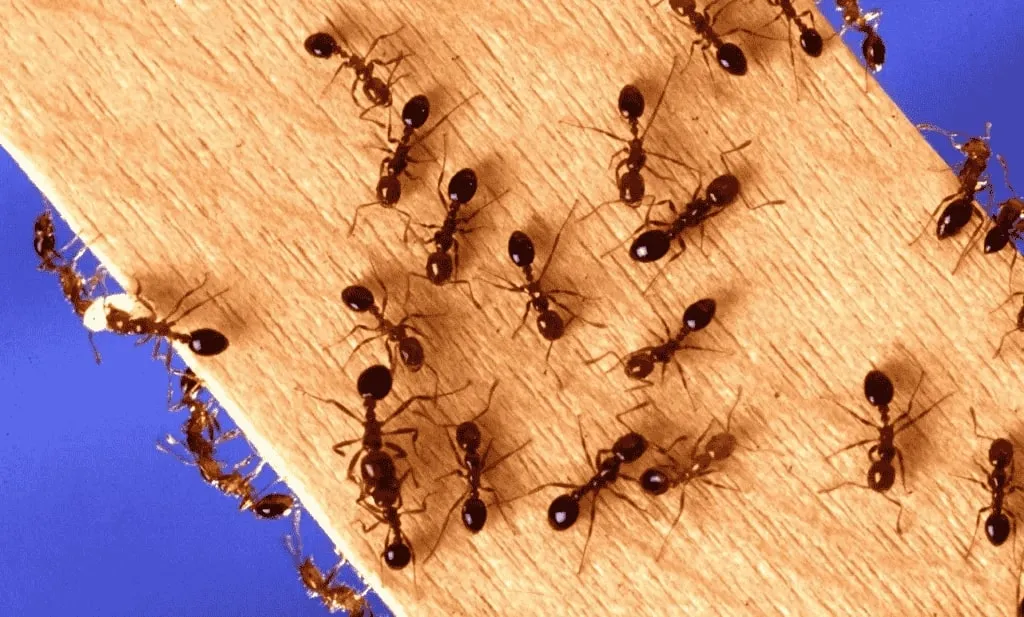
Florida Pest Problems: How to Get Rid of Ants
Safeguard Your Family, Pets & Home From the Threat of Ants
You can spray ants all you want without really making a dent in their population. That’s because you’re eliminating a small, replaceable portion of the colony, which could have tens of thousands of ants. Want to know how to get rid of ants from around your property?
Real control requires working back from the ants you can see to the colony you can’t. Then, you remove the conditions that make your lawn and home worth coming back to. The pest control professionals at Your Green Team have mapped out that process below.
Determine the Kind of Ant Before Anything Else
The most common reason DIY ant control fails is treating the wrong species the wrong way. Ant behavior, nesting preferences, and bait responses vary between common types of ants in the U.S.
For instance, there are pharaoh ants. Spraying near an active pharaoh ant colony signals danger, causing the ants to fracture into multiple groups. One problem has suddenly turned into several. Knowing your species beforehand prevents that kind of issue.
And did you realize that ants like different foods? Some are drawn to sweets, others to protein or fat. Nesting habits vary just as widely, with some living exclusively outside while foraging indoors and others establishing nests inside wall voids, beneath flooring, or behind baseboards.
Did you see an ant or a termite?
These two insects are frequently confused, so here’s how to tell them apart: Ants have a narrow, pinched waist between the thorax and abdomen along with antennae that bend sharply at an angle.
Termites have a broad, consistent midsection without any waist narrowing, and their antennae are straight.
From there, species identification relies on size, color, odor when disturbed, trail location, and nesting behavior. Looking at a combination of these characteristics together typically points clearly to one species over another.
Signs that you have an ant infestation:
- Ants repeatedly appearing in or near food storage areas
- New mounds forming in the lawn or within a few feet of the foundation
- Frass accumulating near wood
- Ant trails consistently following the same path along walls, floors, or countertops
- A swarm of winged ants indoors or clustering around the home’s exterior
Where is the ant colony?
Ant nests can be almost anywhere. Beneath the soil, inside mulch, under a concrete slab, behind walls, or in wood in your yard.
Keep timing in mind as well. Spring brings colonies out of dormancy with foraging intensity at its highest. Summer is peak ant season. Fall shifts ant behavior toward heat-seeking, which often increases indoor pressure.
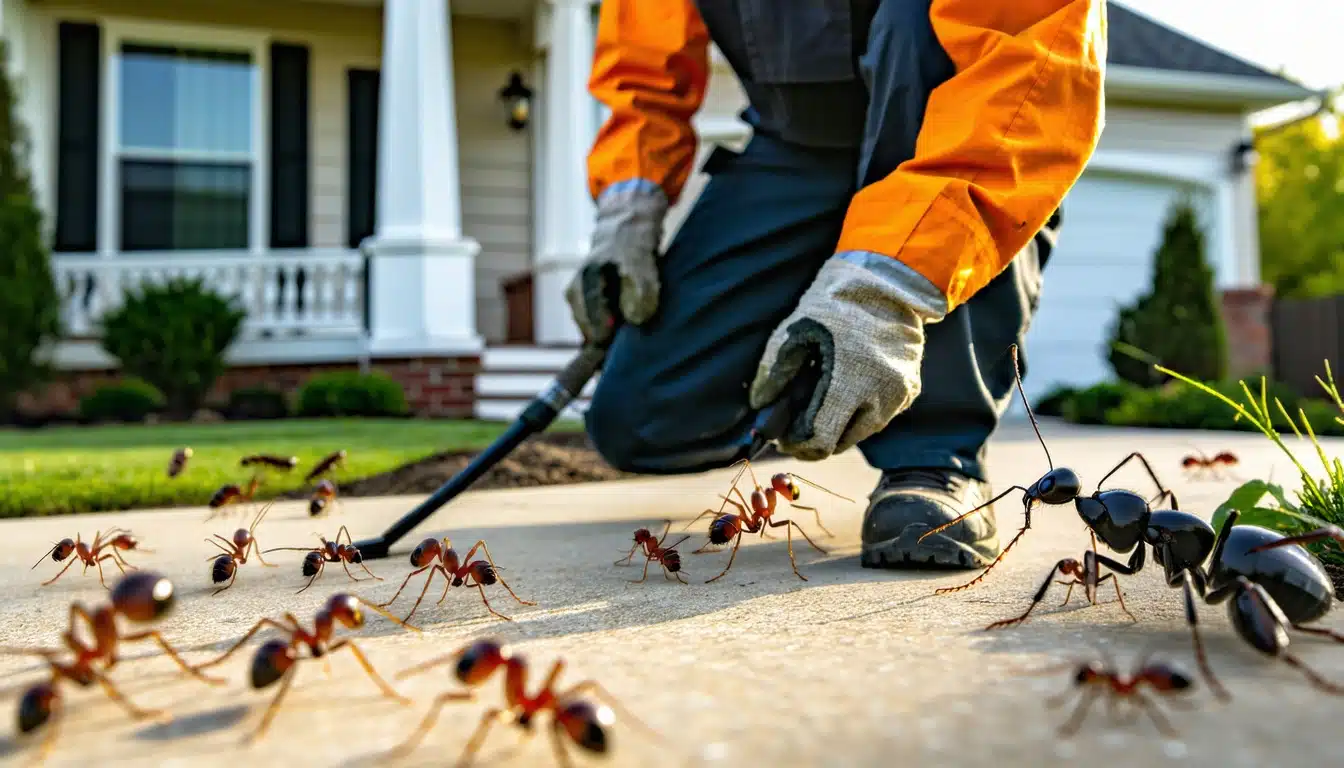
Take Away What Attracts Them
What happens after ants find food or water inside your home? They let their ant buddies know. The way they communicate is through a chemical signal. But removing what they like helps stop the line from forming to come into your home.
Start with food storage. Dry goods in their original cardboard or paper packaging are accessible to foraging ants without much effort. Move them into rigid, sealed containers.
Deal with spills and crumbs immediately rather than wiping down surfaces at the end of the day. Also, don’t forget that dishes left sitting in the sink are a reliable food source and garbage cans that don’t seal tightly are enticing, too.
Water also attracts ants. Even a nearly imperceptible drip beneath a sink provides enough moisture to sustain a colony over the long term. So it’s important to address leaks quickly.
Clear That Chemical Trail
Ant foraging routes are pheromone highways. An established trail grows more defined and more heavily trafficked over time. Fortunately, breaking it up takes minimal effort.
Simply wipe down trail surfaces using diluted white vinegar, warm water with a few drops of dish soap, or a standard glass cleaner. This will degrade the pheromone and leave ants disoriented.
This kind of indoor pest control doesn’t kill the colony, though. Workers will establish new routes and resume foraging as long as the source exists. However, clearing trails before placing bait means workers encounter it without an existing chemical pathway competing for their attention.
Get Rid of the Ant Colony, Not Just Scouts
The ant’s queen isn’t reached by contact sprays. That means she keeps producing new foragers to take the place of the old ones. Plus, the chemical signal broadcast by repellent sprays tells the colony that an area is compromised. Some species reroute their workers to avoid the zone or split the colony entirely.
What actually kills the ant queen?
Bait. Workers encounter it on their trails, consume it, carry it back to the nest, and transfer it to the queen, larvae, and other colony members through normal feeding interactions.
But formulation has to match the species. Sweet, liquid-based baits work on sugar-preferring ants. Protein or fat-based options are necessary for species with different dietary profiles. Ants that ignore a bait station are usually signaling a mismatch between the bait and what they’re looking for.
Where to place ant bait
- Never apply repellent spray near bait; it prevents workers from approaching
- Set stations directly on active trails
- Keep bait accessible for two to four weeks and replenish as needed
- A temporary increase in ant traffic around bait stations is normal
What’s Realistic to Expect?
If you’re wondering, “How do I get rid of ants for good?”, you may need to change your goal. Total, permanent ant elimination isn’t really achievable. Ants are too prolific, too widespread, and under too much population pressure from surrounding properties for any single treatment to solve the problem forever.
What’s achievable is long-term control. That means preventive yard baiting at the start of spring before colonies are fully active, regular perimeter treatments during warm weather, consistent sanitation and structural maintenance, and prompt attention whenever early signs reappear.
Be Sure to Address the Source in Your Lawn
If the colony is established in your yard, workers will keep entering the structure regardless of what you do inside. Don’t forget to check these outdoor areas.
- Beneath rocks, pavers, or stacked landscape materials
- Potted plants and containers resting directly on soil
- Firewood storage areas and deteriorating wood stumps
- Foundation soil and mulch beds, especially where mulch contacts the siding
- Cracks and joints in driveways, patios, and sidewalk surfaces
Outdoor treatment approach:
Here are some quick tips for ant control in Florida. Granular bait applied along foraging paths and near nesting areas is effective in outdoor settings. For perimeter protection, choose non-repellent products over repellent ones because repellent treatments just redirect ants.
Also, keep the area directly against your home’s foundation clear. Pulling back mulch, loose soil, and dense groundcover by several inches removes the sheltered conditions ants prefer. This makes it easier to catch new activity before it develops into a larger problem.
Block the Routes Back Inside
Want to make sure the next season has fewer ants? Once the colony is treated and the perimeter is addressed, seal every entry point you can!
Follow indoor trails backward toward the home’s exterior, tracing them upstream until you locate the point of entry.
Entry points to check:
- Baseboards that have pulled away from walls or floors
- Crawlspace vents, soffit vents, and gaps around exhaust fans
- Plumbing and utility penetrations under sinks and behind appliances
- Door and window frames, threshold seals, and deteriorated weatherstripping
- Foundation cracks and transitions at siding edges
Seal gaps and cracks with silicone caulk, install new weatherstripping if needed, and patch any torn screens.
On the landscape side, you should trim branches away from the roofline and siding, store firewood well away from the foundation, and keep mulch or topsoil from piling against the exterior walls. Each of these actions blocks a pathway or a nesting site.
3 Natural Methods to Get Rid of Ants
Borax bait: Mixed at a low concentration with sugar water (or peanut butter for protein-preferring species), it behaves like commercial bait. Keep competing food sources cleared while bait is active, and keep the mixture away from children and pets.
Vinegar, essential oils, and soap-based sprays: Useful for disrupting trails and killing workers on contact.
Food-grade diatomaceous earth: Causes dehydration in ants that walk through it by damaging their exoskeleton, but loses effectiveness immediately when wet.
When Something Goes Wrong Mid-Treatment
Bait being consumed but problem continuing: Multiple colonies or an untreated outdoor source. Extend the treatment period and conduct a more thorough inspection of the exterior.
Bait being completely ignored: Something more appealing is available nearby. Remove competing food sources, move stations onto the active trail, and reconsider whether the formulation matches the species.
Ants spreading to new areas after spraying: Colony scatter or budding. Repellent triggered a defensive split. Stop spraying near trails, clear pheromone signals by wiping surfaces down, and restart with bait and exterior treatment.
Ants appearing throughout several rooms at once: Multiple entry points, a colony established inside wall voids, an interior moisture issue, or outdoor vegetation creating a bridge directly to the structure.
If these steps still aren’t resolving the problem, professional help is the appropriate next move. The same applies if you’re dealing with carpenter ants near load-bearing wood, fire ant colonies in active outdoor spaces, infestations that reset annually, or ants nesting inside walls.
Your Green Team carries the equipment and expertise to locate what’s been missed and put together a plan that works.
Common Ant Questions
-
Can ants damage my home?
Carpenter ants can cause genuine structural damage over time.
-
Does bait draw more ants?
Temporarily, yes.
-
What produces the fastest results?
Contact spray for immediate visible relief; bait with outdoor perimeter treatment for control that holds over time.
-
Why do ants keep coming back?
Either an outdoor colony was never treated, entry points were never sealed, or neighboring colonies are producing seasonal reinvasion pressure.
-
Are spring infestations worse?
Yes, typically.
-
What actually kills the whole colony?
Slow-acting bait distributed by workers throughout the nest.
-
How long does bait take?
Most colonies show meaningful decline within one to three weeks.
-
Are natural methods worth trying?
For trail disruption near entry points, yes. For eliminating an established colony, bait is the best option.
Stop Florida Ants From Bugging You!
Follow these steps if you’re not sure how to get rid of ants near you. Identify the species, cut off resources, clear the trails, bait the colony, treat the yard, and seal the entry points. Every step builds on the previous one.
If you’d rather have trained professionals handle it, Your Green Team is ready to help. We proudly serve several Florida cities, ensuring high-quality lawn care and pest control services for these communities: