
These Flying Insects Have a Surprising Life Cycle Few Know About
One morning everything looks normal, and the next you walk outside to find your entire porch blanketed in delicate winged insects. If that scene sounds familiar, you’ve already had your introduction to mayflies. Here’s what matters most: they’re completely harmless. No biting, no stinging, no disease risk. That said, “harmless” and “pleasant to deal with” are two entirely different things.
Whether a swarm has already made itself at home on your property or you’re just trying to understand what shows up every spring, the pest control team at Your Green Team are sharing a deep dive on mayflies. So keep reading to learn more!
What Are Mayflies?
Mayflies aren’t actually flies. They belong to the insect order Ephemeroptera and share a closer evolutionary relationship with dragonflies than with the houseflies or mosquitoes most people picture. Regionally, they go by a handful of different names: shadflies, lakeflies, dayflies. The label changes depending on where you are, but the insect is identical.
Their environmental value tends to get lost in the frustration of a swarm, but it’s worth knowing. Mayflies are a cornerstone food source for fish, birds, and bats, and biologists actually track their populations as a marker of water health. A body of water teeming with mayflies is generally one in good ecological shape. So while a swarm descending on your backyard is undeniably aggravating, it carries a quietly reassuring message about the water nearby.
Physical Appearance of Mayflies
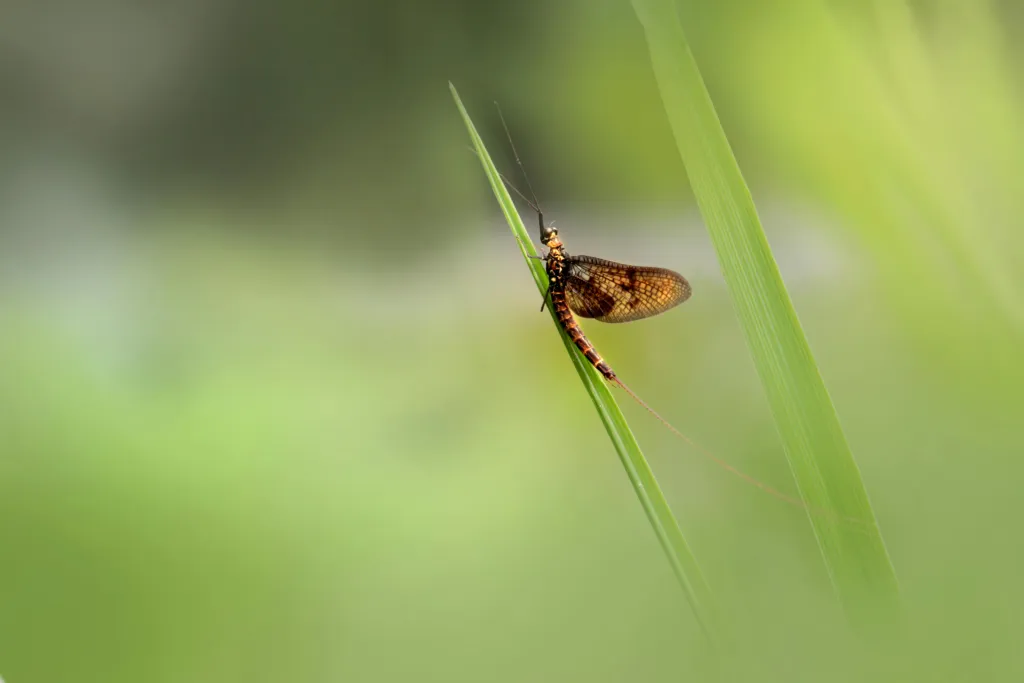
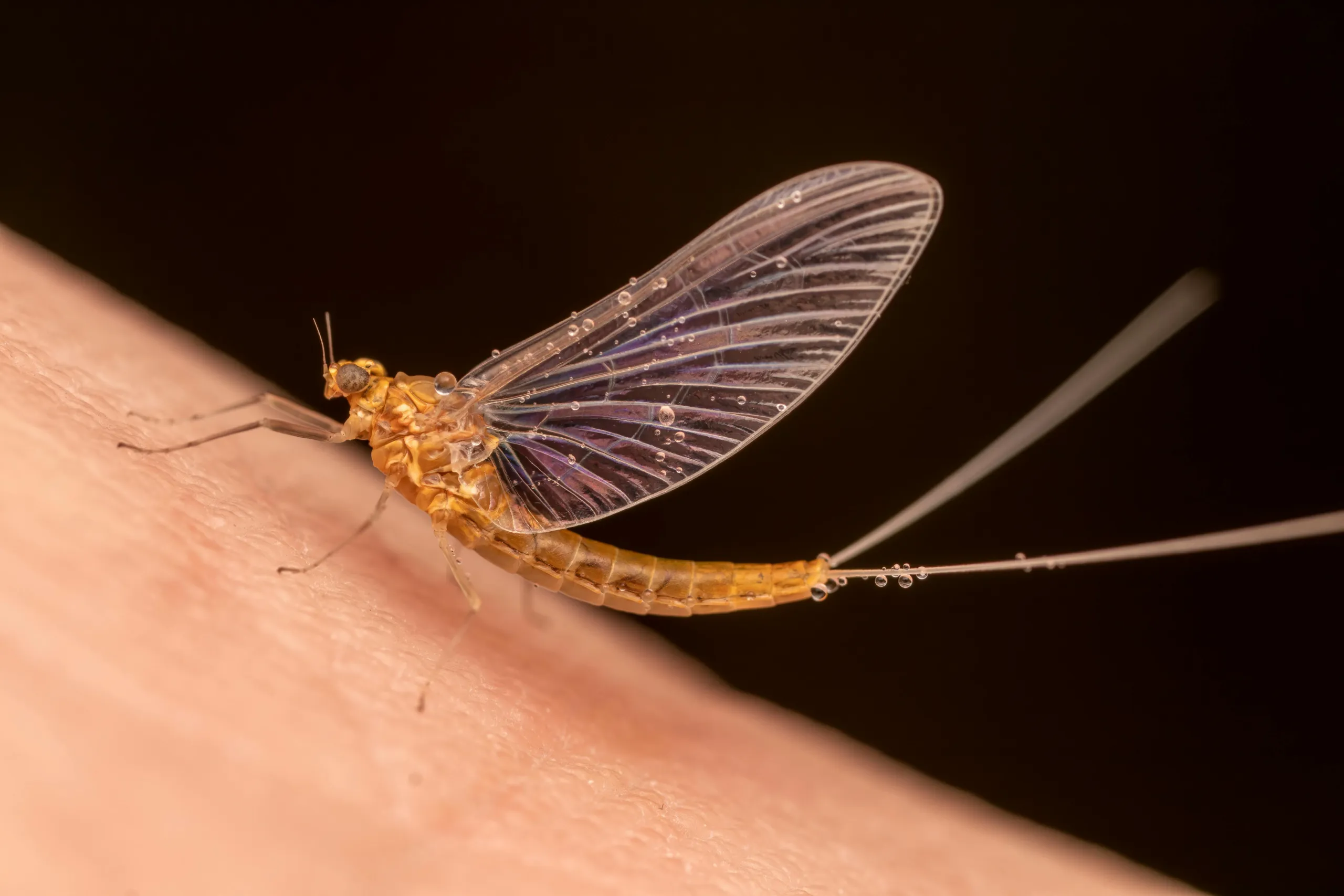
Identifying a mayfly becomes second nature once you’ve seen a few. The wings are the starting point, rather than folding flat along the body, they angle sharply upward in a peaked formation that resembles a tiny tent. Those thread-like appendages trailing from the abdomen are equally distinctive; very few insects carry two or three filaments like that behind them.
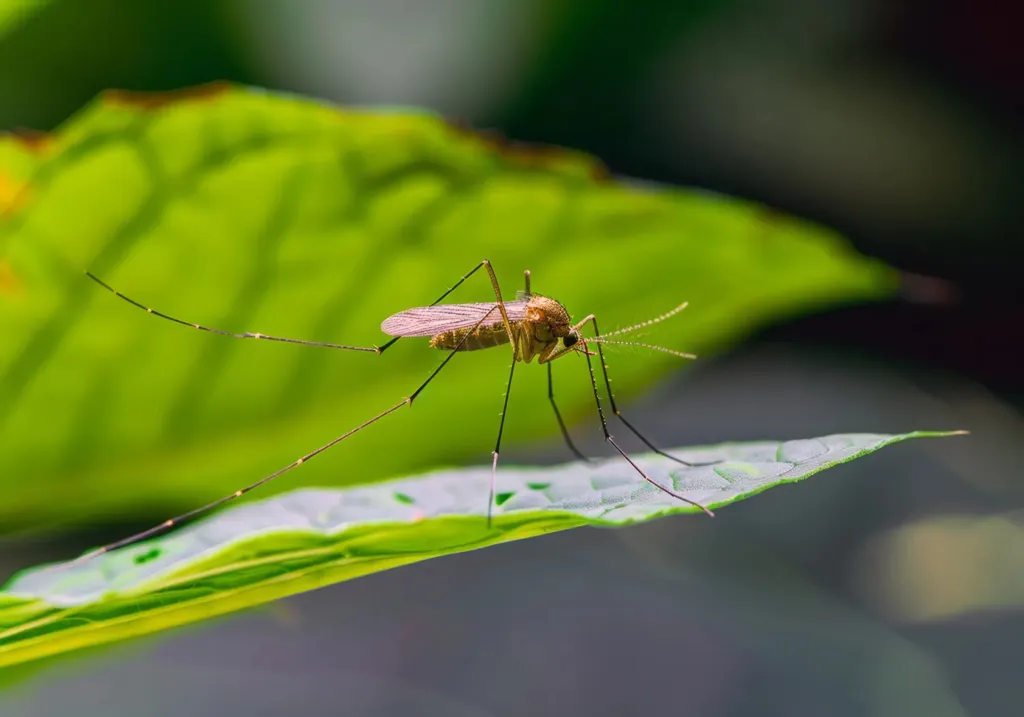
Crane flies and mosquitoes account for most of the misidentification. Here’s what separates them: mosquitoes are equipped with a slender, piercing mouthpart for feeding. Mayflies have no functional mouthparts at all. Crane flies are built larger and lankier, with wings that spread horizontally rather than pointing skyward. Peaked wings combined with tail filaments is a combination that points almost exclusively to a mayfly.
Nymphs (the immature, pre-adult form) bear almost no resemblance to the adult. They run broader and darker, with gills lining the sides of their abdomen. Encountering one means you were poking around in a lake or stream, which isn’t most people’s Tuesday afternoon.
Mayflies or Something Else?
Mayflies vs. Mosquitoes
The mix-up happens constantly, and the stakes of getting it wrong matter. Mosquitoes bite. Mayflies are physically incapable of it. That distinction alone explains why mosquito control is a genuine priority and mayfly control generally isn’t. Wing position is another quick tell: mosquitoes rest with wings flat against the body, while mayflies keep theirs angled upward. And that needle-like feeding tube on a mosquito? Mayflies have nothing remotely similar.
Mayflies vs. Crane Flies
Crane flies are the oversized, spindly insects that make people duck instinctively. They outsize mayflies, lack trailing tail filaments, and hold their wings horizontal rather than elevated. Both species leave humans completely unharmed, but crane fly larvae occasionally feed on grass roots, making them a mild lawn concern. Mayflies cause zero turf damage at any point in their development.
Mayflies vs. Midges
When someone insists a mayfly bit them, midges are almost always the real story. These small insects regularly share habitat and emergence timing with mayflies, and several species are active biters. In a dense swarm, midges are easy to overlook alongside larger mayflies. If welts are appearing, midges deserve the blame.
How Long Do Mayflies Live?
Few insects have a lifespan as uneven as the mayfly’s. The two stages couldn’t be more different in duration.
The Larval (Nymph) Stage
The chapter of life most people never see is also the longest. Nymphs spend anywhere from a few months to two complete years living in rivers, lakes, and streams. They’re active and growing throughout this period, grazing on algae, decaying plant material, and organic debris while cycling through a long series of molts.
The Adult Stage
Then the adult stage arrives…and it’s extremely brief. Most adult mayflies have a window of just 12 to 48 hours. A small number of species push past that slightly in favorable conditions, but for the vast majority, the moment of emergence starts a countdown measured in hours rather than days. No feeding, no rest, no pause. Just a relentless drive to locate a mate, deposit eggs, and complete the cycle.
So the full answer to “how long do mayflies live?” comes down to this: the aquatic phase stretches across months or years, while the aerial stage most people witness is finished before a typical weekend wraps up.
More on the Life of a Mayfly
Everything begins with eggs deposited on or just beneath the water’s surface. Those eggs sink to the bottom and hatch into nymphs that spend the next several months to two years feeding and developing along riverbeds and lake floors. When water temperatures and weather conditions align — typically during warm, still evenings in late spring or early summer — thousands of nymphs begin their synchronized push to the surface.
They breach the water, shed their outer casing, and take to the air as winged subadults. Once the adult stage kicks in, swarms form quickly — sometimes reaching densities that genuinely look like weather patterns moving across the water. A single female deposits between 500 and 8,000 eggs before she dies, with the total varying by species and body size. Those eggs settle to the bottom and launch the cycle once more.
The overwhelming effect of a swarm comes entirely from the timing. When an entire nymph population surfaces over one or two evenings rather than trickling out across weeks, the result is a sudden, dramatic explosion of insects. Add warm Florida temperatures, calm air, and a nearby light source, and you have exactly the conditions that send homeowners reaching out about outdoor pest control services.
Will There Be More Mayflies This Year?
Fluctuations in population size from one year to the next are completely expected. Water temperature, winter survival rates among nymphs, regional weather trends, and the overall health of local waterways all factor into how large any given emergence turns out to be.
A mild winter followed by a warm, wet spring sets up ideal conditions for a massive hatch. Improving water quality also plays a role. As lakes and rivers recover, mayfly populations tend to grow right alongside the ecosystem.
Where Do Mayflies Like to Live?
Freshwater is the non-negotiable anchor of the mayfly’s world. Lakes, rivers, ponds, and streams all serve as habitat, and their presence in a waterway is almost always an encouraging ecological signal. Heavily compromised or polluted water drives mayfly populations out long before most other warning signs surface.
Adults spread away from the water once they emerge, but they don’t venture far — they’re not strong fliers, and artificial light redirects them with remarkable consistency. Around Florida homes, the spots where they gather most reliably include:
Siding and windows: vertical surfaces collect them quickly, and at swarm scale the coverage can be genuinely striking
Docks, patios, and pool areas: nighttime emergence turns these outdoor spaces into prime congregation points
Outdoor lights: bright white bulbs and older mercury vapor fixtures are particularly effective at pulling them in
Vehicles: parked cars become landing surfaces, and the residue left behind is a genuine hassle
Do Mayflies Sting or Bite Humans?
Not at all. Adult mayflies are structurally incapable of biting or stinging. Their mouthparts are vestigial and serve no function, and their digestive systems hold air rather than anything designed to process food. There is no feeding apparatus, no venom delivery system, and no capacity for harm.
Any sensation of being bitten during a swarm almost certainly traces back to a mosquito or midge sharing the same airspace. In the chaos of a thick swarm, the mix-up is easy to make, but the mayfly isn’t responsible.
Disease transmission is also off the table. Mayflies carry no pathogens and spread nothing. At worst, one might tangle in your hair or leave a mess on your driveway that requires a solid hosing down.
When Are Mayflies Most Active in Florida?
Late spring through summer covers the broad seasonal window, but Florida and the Gulf Coast run ahead of that national timeline. Warmer water temperatures that carry through winter push emergence earlier here. April and May are when activity typically picks up, noticeably ahead of the Midwest, where major hatches near the Great Lakes don’t generally start until late May and can stretch into July.
Evening conditions drive the week-to-week timing. Still air and mild temperatures are the combination that gets nymphs moving toward the surface. A cold front sweeping through can halt emergence almost immediately. However, activity will resume once warmth and calm return.
Are Mayflies Harmful Insects?
From a health standpoint, no. From a practical standpoint, a large accumulation is worth staying on top of.
The odor alone is enough reason to act quickly. Decomposing mayflies produce a smell that lands somewhere between stale water and rotting fish, and it builds fast when piles go unaddressed.
Beyond that, thick layers of carcasses on pavement or steps create a legitimate slip hazard. Let the buildup linger and a secondary issue emerges: birds and bats arrive to feed on the remains, and that brings its own complications.
Not a health threat, but definitely not something to ignore when numbers get high.
What Attracts Mayflies to Your Home?
Outdoor lighting — Blue-spectrum and bright white bulbs function almost like a beacon. Shifting to warmer-toned LEDs is one of the most practical and immediately effective steps available.
Proximity to water — Geography is the primary driver here. Properties within a mile of a lake, river, or pond during emergence season are directly in the path of any nearby swarm.
Reflective surfaces — Mayflies appear to register certain reflected light as open water. A glossy car hood, a pool surface, or polished siding can all serve as unintended landing zones.
Calm, warm evenings — Mayflies don’t emerge well in wind or cold. Florida delivers the kind of still, mild spring nights that create near-perfect emergence conditions on a regular basis.
How to Handle Mayflies in Florida
The honest reality is that eliminating mayflies at the source isn’t possible. The breeding population lives entirely underwater across waterways that no residential treatment can reach. The practical goal is limiting how many end up on your property and recovering quickly when they do.
Prevention Tips
- Inspect window and door screens for tears or gaps and repair anything compromised before spring
- Draw curtains or blinds on windows adjacent to exterior lights once evening arrives
- Run a fan on your patio since mayflies struggle against even a mild, consistent breeze
- If you have a decorative pond or backyard water feature, be aware it can draw in females during egg-laying season
Immediate Cleanup
Move quickly once a swarm passes through. A broom, shop vac, or garden hose handles most of the debris efficiently. Getting to it fast keeps odor from building and prevents slippery accumulation on hard surfaces.
Light Management
Swapping bright white outdoor bulbs for yellow or amber LED alternatives removes one of the strongest attractants on your property. Adding motion-sensor controls so lights aren’t running all night further reduces draw, as does angling fixtures downward to limit how far the light travels.
On the worst swarm nights, cutting outdoor lighting entirely outperforms every other measure available.
Do Insecticides Work Against Mayflies?
Rarely, and they’re almost never worth pursuing. The adult lifespan is too brief for chemical treatment to have meaningful impact. Spraying near water sources also raises environmental concerns that aren’t justified by the outcome.
For severe situations at commercial properties, a targeted treatment might occasionally be warranted. For Florida homeowners dealing with a residential swarm, patience and light management accomplish considerably more.
When to Call the Experts
The majority of Florida homeowners ride out mayfly season without needing professional assistance. The swarm passes quickly, and a few practical adjustments are usually enough. That said, there are situations where calling in a professional makes sense:
- Recurring severe swarms that disrupt daily life year after year despite consistent DIY efforts
- Commercial properties where insect accumulation on walkways, parking areas, or storefronts creates genuine safety concerns
- Real uncertainty about whether the insects causing problems are harmless mayflies or biting, disease-transmitting mosquitoes
Your Green Team’s pest control specialists can pinpoint exactly what’s going on, identify any other pest activity that may be mixed in, and put together an approach built around your specific property and circumstances.
Mayfly FAQs
-
Do mayflies damage lawns or plants?
No. Adult mayflies are incapable of feeding, and their nymph stage is entirely aquatic. Your lawn and garden are completely safe.
-
How long will a mayfly swarm last?
Most peak emergence periods wrap up within one to three days. When multiple species are hatching in sequence, the window can stretch toward a week.
-
Why are mayflies attracted to light?
Mayflies rely on the moon and stars for navigation. Artificial lighting throws that system off entirely, drawing them toward any bright source in the area. Blue-spectrum bulbs are the most disruptive offenders.
-
Can mayflies infest my house?
No. They don’t reproduce indoors, have nothing to consume inside a home, and die within hours of getting in. A stray few might slip through an open door, but establishing themselves indoors isn’t something they’re capable of.
-
Are mayflies a sign of dirty water?
Actually, the reverse is true. Mayfly populations require clean, well-oxygenated water to thrive. Seeing mayflies near Florida’s lakes and waterways is a genuinely positive ecological indicator.
Spring Pest Problems? Call Us!
A mayfly swarm on your property is frustrating, but it’s also short-lived. Transition to warm-toned outdoor lighting, stay ahead of cleanup, and remember the swarm clears on its own within a day or two in most cases.
Whether you’re dealing with mayflies, mosquitoes, or other lawn pests, Your Green Team can help you develop a seasonal pest management plan tailored to your property and location. With skilled technicians and the highest quality materials, we’ll get your lawn looking its absolute best.
We proudly serve several Florida cities, ensuring high-quality lawn care and pest control services for these communities:
Blog Contributor: Rob Karr
Rob Karr serves as the New Port Richey and Hudson Branch Manager for Your Green Team, with 22 years of experience. His professional perspective is shaped by customer interaction, team communication, employee safety, and long-term branch leadership. His experience gives him a practical understanding of both customer service and day-to-day lawn care operations.